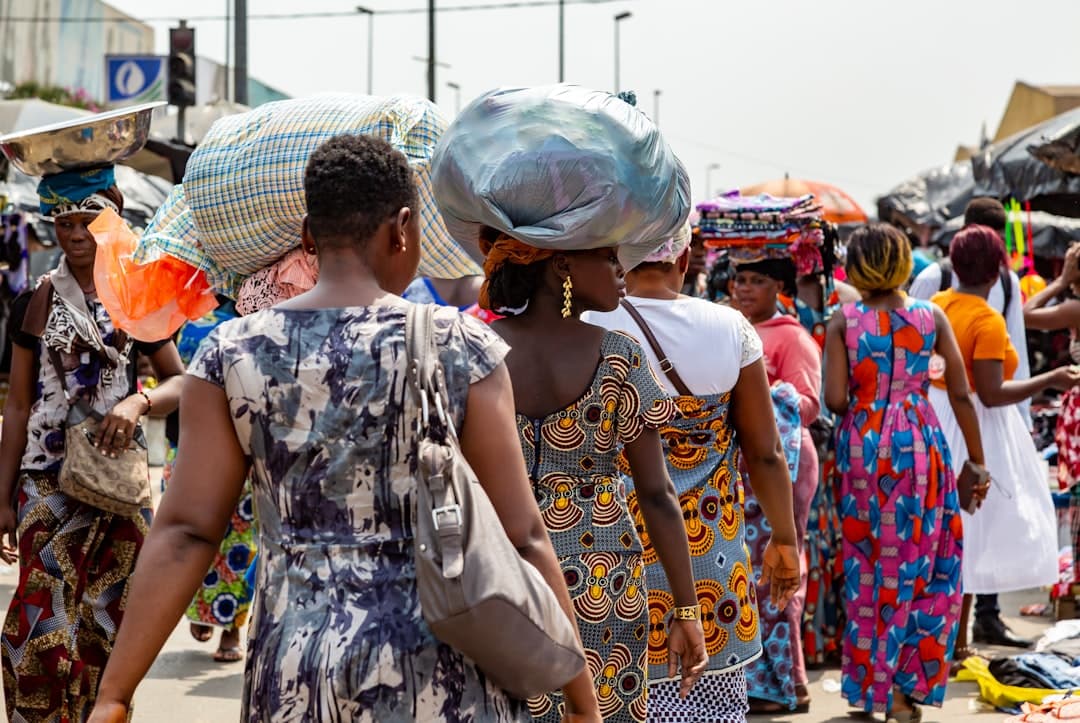
I grew up in a Nairobi where you knew your neighbors mostly because you had no real choice — the wall between compounds was low enough to hear an argument, water shortages meant everyone showed up at the same tap at the same time, and a wedding or a funeral pulled in half the street whether you were close to the family or not. I live now in a version of the same city where I could, in principle, go weeks without a single unplanned conversation with anyone who lives near me. Nothing dramatic caused this. It happened the way most real changes happen — slowly, through a thousand small conveniences, each one individually reasonable.
I don't say this as a lament for some imagined golden age, because the old version of proximity came with its own costs — very little privacy, obligations you couldn't opt out of, community as much enforced as chosen. But I think it's worth being honest about what got traded away in the move to a more convenient, more private, more optional version of social life, because I don't think most of us actually chose that trade deliberately. It happened to us, one app and one gated compound at a time.
What's replaced physical proximity, for a lot of people my age and younger, is something that looks like community but behaves differently underneath. A WhatsApp group is not nothing — I've watched genuine care move through them, real help arrive fast when someone in the group needed it. But a WhatsApp group is also opt-in in a way a street is not. You can mute it. You can leave it with one tap and no confrontation. The friction that used to force people to work through disagreements with neighbors they couldn't simply block has mostly disappeared, and friction, it turns out, was doing more work than we gave it credit for. It's often what turned people who didn't naturally like each other into people who had learned to get along anyway.
I think about this most acutely around the informal economy that used to run entirely on reputation within a physical neighborhood — the mama mboga who extended credit because she'd watch you grow up, the mechanic who did honest work because word would travel three streets over if he didn't. A lot of that has moved online, onto platforms with star ratings instead of decades of shared history. It's more efficient, genuinely — you can find a good mechanic across town instead of only the one down the road. But something about accountability rooted in an actual, ongoing relationship, rather than a rating that can be gamed or forgotten, feels like it's thinning out, even as the technology around it gets more sophisticated.
The culture that's replacing it isn't worse in every way — I want to resist the easy nostalgia here. Young people in this city are building genuinely new forms of belonging: interest-based communities that would have been geographically impossible a generation ago, support networks that cross tribal and class lines in ways the old neighborhood-bound version of community rarely managed. A friend who moved here from a small town told me the anonymity of the city, the very thing that erodes old-style community, was also what let her build an identity nobody back home would have permitted her to have. Both of those things are true at once, and I don't think there's a clean verdict to deliver.
What I keep coming back to is a narrower, more personal question: given that I can't put the old structure back — nobody can, the conditions that produced it are gone — what am I actually doing to build the deliberate version of it? Because the old kind of community was involuntary. This new kind, if it's going to exist at all, has to be chosen and maintained on purpose, which is a genuinely harder thing to sustain than something that used to just happen to you by default.
I don't have a tidy conclusion here, mostly because I don't think there is one. But I've started treating the maintenance of actual, non-transactional relationships — the kind that cost me time I could otherwise be optimizing away, to borrow a theme I keep returning to — as a discipline in its own right, not something that will simply happen on its own the way it used to. That feels like the honest cost of the convenience we've all, mostly without discussing it, agreed to.