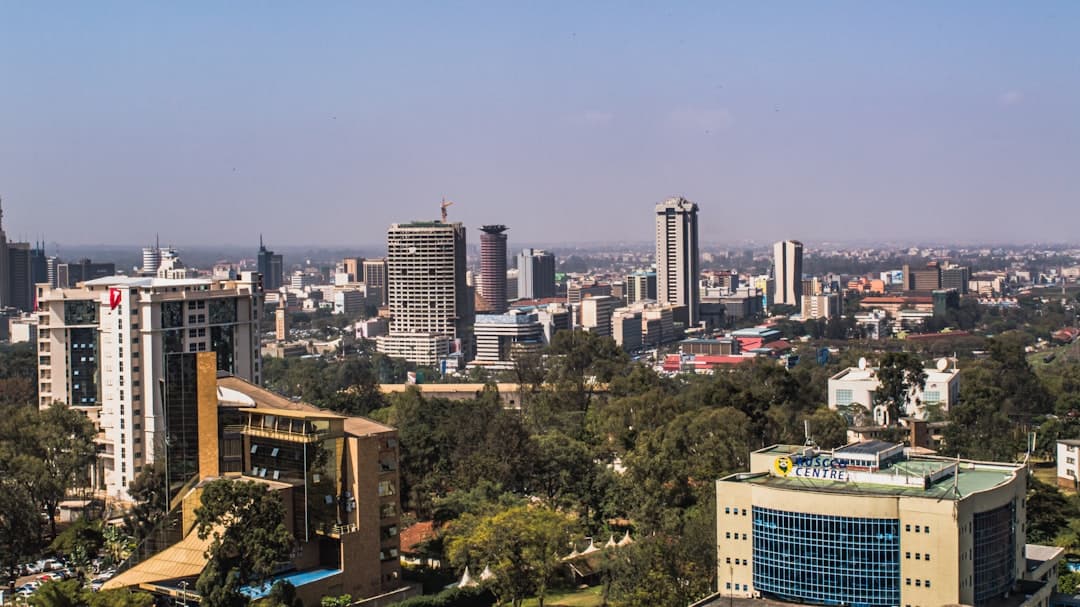
For a long time, I thought about the constraints of building technology in Kenya the way I think about a bug I'm trying to route around rather than fix — power that isn't always reliable, internet that's genuinely good in Nairobi but drops off fast outside it, payment infrastructure that works brilliantly for M-Pesa and clumsily for almost everything that isn't, a talent market that's grown enormously but is still smaller and more expensive to retain in than the story people tell about it suggests. The instinct, especially early on, is to treat all of this as noise to be engineered around on the way to building something that could, in principle, exist anywhere.
I've come to think that instinct, while understandable, gets the relationship backwards. The constraints I used to treat as obstacles are, more often than I expected, exactly the thing that makes certain kinds of building here more interesting and more valuable than building the same thing somewhere with fewer constraints. M-Pesa itself is the clearest example, and it's a genuinely instructive one: it didn't emerge despite the absence of widespread traditional banking infrastructure in Kenya. It emerged because of that absence, solving a real problem in a way that markets with entrenched banking systems had far less incentive to solve at all. The constraint didn't just get worked around. It shaped a solution that ended up more elegant, in some respects, than what existed in places without the same pressure.
That reframe has changed how I think about the work I do. When I'm designing a system that needs to function reliably on intermittent connectivity and modest devices, I used to think of that as a degraded version of the "real" engineering problem — the one you'd get to solve properly with unlimited bandwidth and the newest hardware. I think of it differently now. Designing for genuine constraint is a harder, more disciplined engineering problem than designing for abundance, and the solutions it forces you toward — leaner, more resilient, less dependent on assumptions that don't hold everywhere — are often better solutions even for contexts that don't share the constraint. Abundance makes you sloppy in ways you don't notice until you're forced to build without it.
I want to be careful not to romanticize this into something it isn't. There is real, ongoing difficulty in building here that doesn't resolve into a tidy lesson about resilience. Access to capital is still harder and more expensive than it should be for the quality of the ideas being pursued. Regulatory environments across the region are inconsistent and sometimes actively hostile to the kind of fast iteration good software companies need. Talented people I've worked with have left for opportunities abroad not out of a lack of belief in what's being built here, but because the practical math of supporting a family sometimes makes staying genuinely difficult to justify, and I don't think it's honest to pretend that calculation is wrong for the people making it.
What I try to hold at the same time, without letting either half cancel out the other, is that neither the difficulty nor the opportunity is the whole story. It's genuinely harder to build certain things here than in markets with more capital and more forgiving infrastructure. It's also genuinely true that the things worth building here — solving real problems for real people navigating real constraints — are not smaller or less serious versions of "real" technology work happening elsewhere. In some cases they're a harder, more honest version of the same problem, being solved by people who don't have the luxury of pretending the constraints aren't there.
I don't think the answer is unrealistic optimism about how far things have come, and I've grown genuinely tired of narratives, often written by people who don't have to live inside the actual constraints, that flatten this into an uncomplicated success story. But I also don't think the answer is the opposite flattening — treating every constraint purely as a deficit to be lamented or escaped. The most honest position I've found, after years of actually doing this work rather than just talking about it, is closer to what I said at the start: building from here rather than around here. Taking the actual conditions seriously as the starting point for good work, not as an inconvenience standing between me and some cleaner, imagined version of the problem that exists somewhere else.
By David M Ogaro